I’m a Skincare Beginner. Is Nivea a Good Starting Brand Compared to Garnier in 2026?
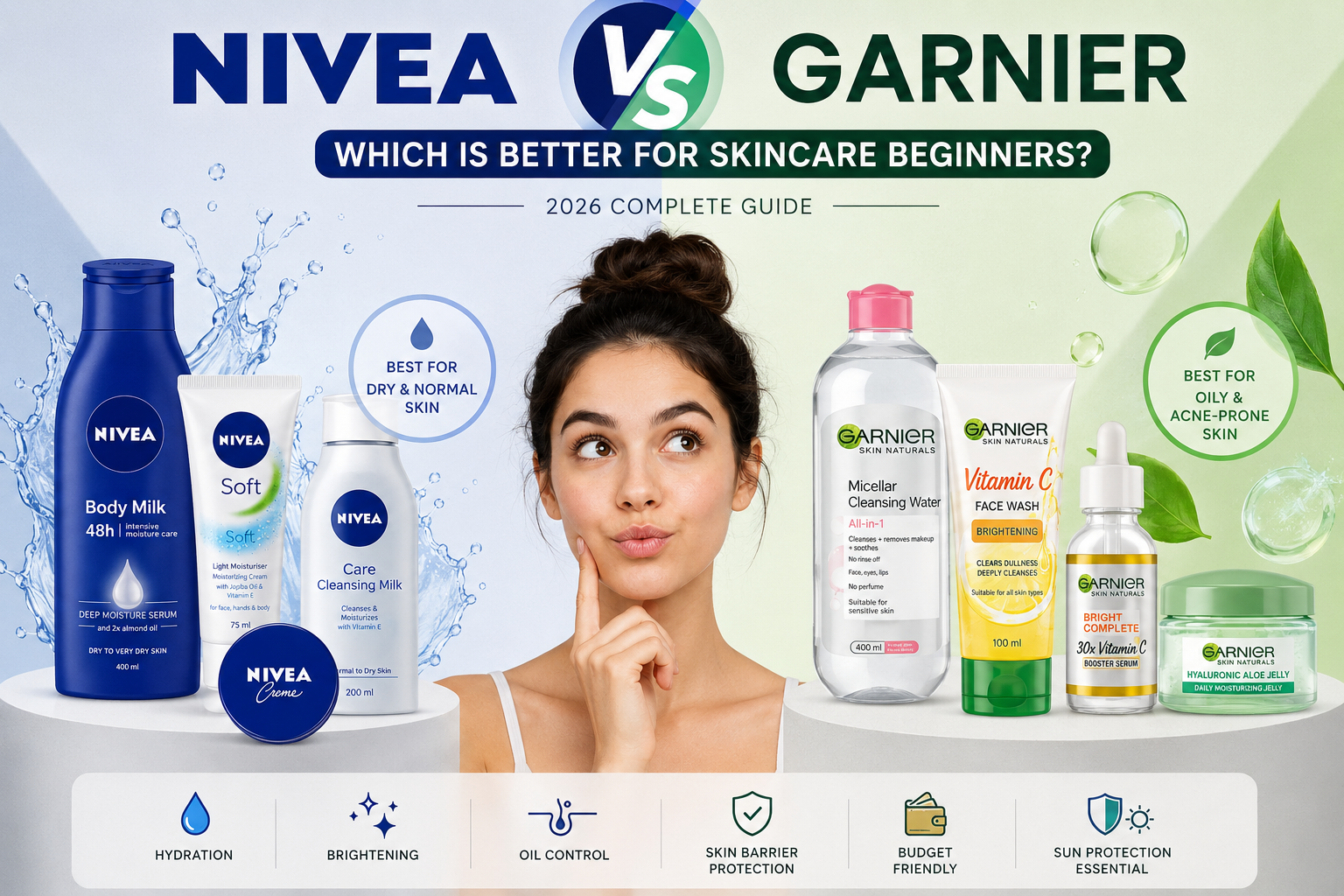
Starting skincare for the first time can feel like walking into a supermarket aisle with a hundred bottles and zero instructions. Everyone online seems to recommend something different, and it’s easy to end up buying products that don’t actually match your skin or, worse, cause irritation you didn’t have before.
Two names come up constantly in this search: Nivea vs Garnier. Both are affordable, both are sold almost everywhere, and both have been trusted household names for decades. So the real question isn’t which brand is “better” in general; it’s which one is better for you, right now, as a beginner.
This guide breaks that down in detail: skin types, ingredients, pricing, specific products, routines, and the science behind why each brand works the way it does.
Quick Answer
Yes, Nivea is a wonderful starting brand for most beginners, especially if you want simple, hydrating, no-fuss skincare. But if your skin is oily, acne-prone, or you want lightweight ingredient-focused formulas, Garnier is the better pick.
The one-line rule:
- Dry, normal, or sensitive skin → Nivea
- Oily, combination, or acne-prone skin → Garnier
- Not sure yet? Start with a gentle cleanser, a moisturizer, and sunscreen. Mixing products from both brands is completely fine.
The real secret to good skin isn’t the brand; it’s using the right product consistently for weeks, not days.
Why Beginners Compare These Two Brands
Nivea and Garnier show up in almost every “best skincare for beginners” conversation for a simple reason: accessibility. You don’t need a specialty beauty store or a big budget to find either brand. They’re sitting on the shelf of nearly every pharmacy, supermarket, and convenience store.
Both brands offer:
- Face cleansers
- Moisturizers
- Body lotions
- Sunscreens
- Lip care
- Men’s skincare ranges
- Travel-size and full-size options
However, the philosophy behind each brand is genuinely different, and understanding these differences is more valuable than any star rating.
- Nivea’s approach: protect the skin barrier, lock in moisture, and keep things simple and low-risk.
- Garnier’s approach: solve specific problems using active ingredients, oil control, brightening, and texture improvement.
Neither approach is “wrong.” They’re just built for different starting points.
Know Your Skin Type First
This is the step most beginners skip, and it’s the single biggest reason people end up disappointed with a product that objectively isn’t bad, it just wasn’t right for their skin.
| Skin Type | How to Tell |
| Dry | Feels tight after washing, sometimes flaky or rough, may look dull |
| Oily | Forehead, nose, and chin get shiny within a few hours of washing |
| Combination | Oily T-zone (forehead, nose, chin), normal or dry cheeks |
| Sensitive | Turns red, itchy, or uncomfortable easily with new products |
| Normal | Balanced, rarely too oily or too dry, minimal reactivity |
A simple at-home test: Wash your face with a mild cleanser, pat dry, and wait one full hour without applying anything. Then check:
- Tight, flaky, or uncomfortable → dry skin
- Shiny across the entire face → oily skin
- A shine only down the center makes it impossible to know what caused the reaction. forehead, nose, chin) → combination skin
- No major discomfort, balanced feel → normal skin
If your skin reacted to several products in the past, with redness, stinging, or breakouts from things that don’t usually cause them, you likely lean sensitive, regardless of your oil level.
Brand Overview
Nivea
Nivea has been in the skincare business for more than 100 years, and its reputation is built almost entirely on dependable hydration. This isn’t a brand chasing trends. It’s a brand that has stuck to the same core promise for decades: keep skin soft, comfortable, and protected.
Product range: face creams, body lotions, cleansers, lip balms, sunscreens, eye creams, men’s skincare, and hand creams.
Strengths
- Deep, long-lasting hydration
- Beginner-friendly, simple formulas with fewer active ingredients
- Reliable, low-irritation moisturizers
- Strong price-to-quality ratio
- These moisturizers are available in nearly every store across the globe.
Limitations
- Some richer creams can feel heavy on oily or combination skin.
- A handful of products contain added fragrance, which sensitive skin may want to avoid.
- Limited options for targeted concerns like acne or hyperpigmentation
Garnier
Garnier has moved toward ingredient-driven, problem-solving skincare. Instead of one moisturizer for everyone, Garnier tends to build separate lines for separate concerns: brightening, oil control, hydration, and anti-aging.
Product range: micellar water, vitamin C serums, face washes, moisturizers, sunscreens, hyaluronic acid products, and charcoal cleansers and exfoliating treatments.
Strengths
- Lightweight, fast-absorbing textures
- Strong lineup for oily and acne-prone skin
- Effective brightening and anti-dullness products
- Wide product variety across concerns
- Frequent innovation and new formula releases
Limitations
- Some active ingredients (Vitamin C, Salicylic Acid) may irritate very sensitive skin if introduced too fast.
- Certain moisturizers aren’t rich enough for very dry or dehydrated skin.
- More products to choose from can feel overwhelming for a first-timer.
Head-to-Head: Nivea vs Garnier by Concern
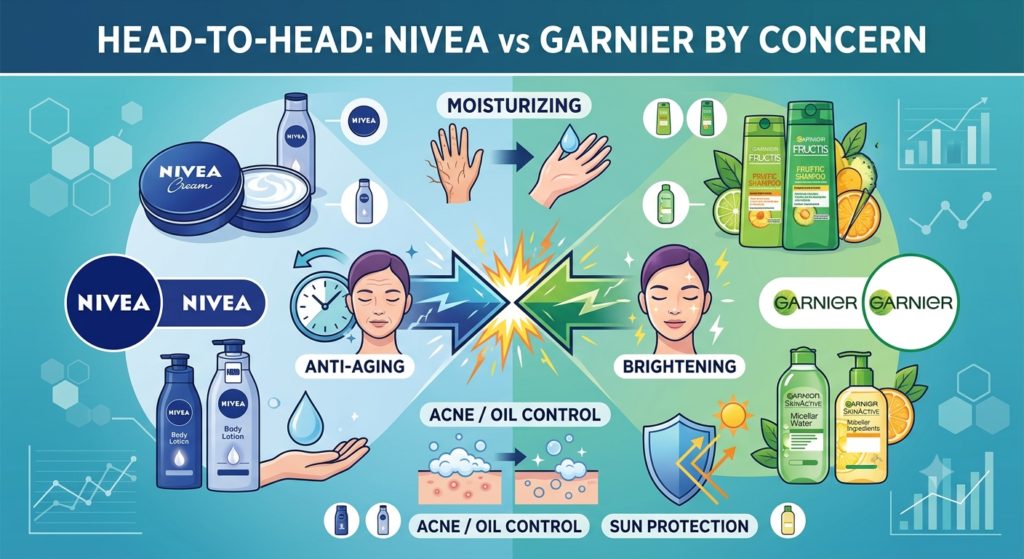
This is the section that actually matters most, not “which brand overall” but “which one solves my specific problem.”
Skin Barrier Protection & Hydration
Nivea’s formulas lean heavily on glycerin, panthenol, and shea butter, ingredients that sit on the surface of the skin and slow down water loss (a process called transepidermal water loss, or TEWL). This makes Nivea especially effective for repairing a compromised or chronically dry barrier.
Garnier’s hydration mostly comes from hyaluronic acid, which works differently. It pulls moisture into the skin rather than sealing it in. It hydrates well in humid conditions but doesn’t lock moisture in as effectively as Nivea’s richer creams, especially in dry or cold climates.
Winner: Nivea
Acne & Oil Control
Garnier’s salicylic acid and charcoal-based products work by penetrating the pore lining, helping to clear excess oil and dead skin buildup. This is the exact combination that can lead to clogged pores and breakouts. Niacinamide (also common across Garnier’s range) helps calm redness and gradually regulate oil production.
Nivea doesn’t have a dedicated acne-fighting range. Its formulas are built for comfort and hydration, not active oil control, so it tends to fall behind here.
Winner: Garnier
Brightening & Uneven Tone
Garnier’s Vitamin C products work by slowing down excess melanin production, the pigment responsible for dark spots and uneven tone. Combined with niacinamide in some formulas, this makes Garnier’s brightening line noticeably more effective for dullness and post-acne marks.
Nivea does offer some Vitamin C and brightening products, but the range is smaller and generally less concentrated.
Winner: Garnier
Everyday Comfort & Sensitivity
Nivea’s simpler formulas, with fewer active ingredients, generally cause less irritation for first-time skincare users; there’s less that can go wrong. Garnier’s actives are effective, but they need to be introduced gradually, especially on reactive or sensitive skin.
Winner: Nivea (slight edge)
Anti-Aging & Fine Lines
Neither brand is primarily marketed as an anti-aging line, but both offer basic options. Nivea’s anti-aging creams focus on hydration-based plumping (temporary smoothing from moisture). Garnier’s options sometimes include mild retinol alternatives or vitamin C, which has some longer-term antioxidant benefits.
Winner: Slight edge to Garnier, but neither is a dedicated anti-aging brand.
Ingredient Science
Understanding why an ingredient works helps you make better choices long after you finish this article.
Common in Nivea:
- Glycerin — a humectant that draws water into the skin and helps it stay there
- Panthenol (Vitamin B5) — soothes irritation and supports overall barrier function
- Shea Butter—an emollient that seals the skin surface, reducing water loss.
- Jojoba Oil / Almond Oil—lightweight oils that mimic the skin’s natural sebum, helping soften texture without heavy greasiness.
Common in Garnier:
- Salicylic Acid—an oil-soluble acid that penetrates into pores to dissolve excess oil and dead skin, reducing blockages that lead to breakouts.
- Niacinamide — reduces redness, helps regulate oil production, and blocks excess melanin transfer, which fades dark spots over time
- Hyaluronic Acid—a humectant capable of holding up to 1,000 times its weight in water, giving an immediate hydration boost (works best when applied to damp skin, then sealed with a moisturizer)
- Vitamin C—an antioxidant that slows melanin production, brightens tone, and helps protect skin from everyday environmental stress (note: it can oxidize and lose effectiveness if stored in a clear bottle exposed to sunlight; opaque or dark packaging is better)
- Aloe Vera — soothes irritation and provides light, non-greasy hydration
- Charcoal—has an absorbent quality that helps pull out excess oil and impurities from pores
Simple takeaway: Nivea’s ingredients protect and hydrate. Garnier’s ingredients treat and target. A beginner with no specific concern usually does fine starting with Nivea. A beginner with a specific problem such as oiliness, dullness, or breakouts will benefit more from Garnier’s active ingredients, which should be introduced one at a time. A beginner with specific concerns, such as oiliness, dullness, or breakouts, benefits more from Garnier’s active ingredients, which, when introduced one at a time, benefit beginners with specific concerns like oiliness, dullness, or breakouts more effectively. one at a time.
Price Comparison
| Product Type | Nivea (Approx. Price) | Garnier (Approx. Price) |
| Face Cleanser | $4–7 | $5–9 |
| Moisturizer | $6–10 | $7–12 |
| Body Lotion | $5–9 | $6–10 |
| Sunscreen | $6–11 | $7–12 |
| Serum | Limited range | $8–15 |
| Micellar Water | Not a core offering | $5–8 |
Prices vary by region, retailer, and package size; treat these as rough guides, not fixed figures.
Both brands sit firmly in the affordable, drugstore category compared to premium or dermatologist-brand skincare, which can easily run $30–100+ per product. Neither Nivea nor Garnier requires a large budget to build an effective beginner routine; a full three-step routine (cleanser, moisturizer, sunscreen) from either brand typically costs somewhere between $15 and $30 total.
Best Brand by Skin Type
| Skin Type | Winner | Why |
| Dry Skin | Nivea | Richer, barrier-repairing formulas with proven moisture-locking ingredients |
| Oily Skin | Garnier | Lightweight, oil-controlling formulas that don’t add extra shine |
| Combination Skin | Tie | Mix cleanser (Garnier) + moisturizer (Nivea) for balanced results |
| Sensitive Skin | Nivea (slight edge) | Fewer active ingredients, gentler overall formulas |
| Acne-Prone Skin | Garnier | Salicylic acid, niacinamide, and charcoal directly target breakouts |
| Normal Skin | Tie | Either brand’s basic moisturizer works well; personal texture preference decides it |
Product-by-Product Breakdown
Face Cleanser
Winner: Garnier. The micellar water range in particular is excellent at removing sunscreen, oil, and light makeup without over-stripping the skin, a common complaint with harsher cleansers. Nivea’s cleansers are gentle and comfortable but generally less effective at cutting through oil and SPF buildup at the end of the day.
Moisturizer
The comparison is genuinely close, and the winner depends entirely on skin type:
- Dry skin: Nivea, for its richer, longer-lasting hydration
- Oily skin: Garnier, for its lighter, faster-absorbing gel textures
- Combination skin: Tied, many people use a lighter product in the T-zone and a richer one on the cheeks.
Body Lotion
Winner: Nivea. This has always been one of Nivea’s strongest categories: long-lasting hydration, a smooth, non-sticky texture, and reliable performance for daily use, especially in colder or drier climates.
Sunscreen
Garnier’s sunscreens tend to have a lighter, faster-absorbing finish, which usually suits oily skin better. Nivea’s sunscreens are more moisturizing, making them suitable for normal-to-dry skin. Regardless of brand, look for:
- SPF 30 or higher
- Broad-spectrum protection (covers both UVA and UVB rays)
- A texture you’ll actually tolerate wearing every single day, because the best sunscreen, by far, is the one you don’t skip.
Serums
Winner: Garnier, simply because it has a much wider serum lineup (vitamin C, hyaluronic acid, and niacinamide-based options). Nivea’s serum range is comparatively limited, since the brand’s core identity is built around creams and lotions rather than treatment serums.
Specific Products Worth Knowing
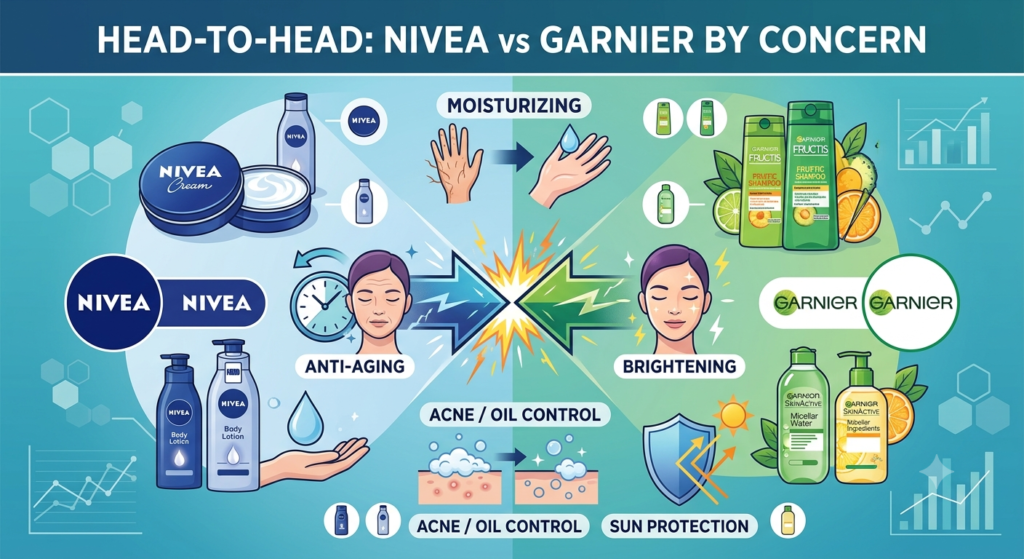
While this guide focuses on brand-level comparison, it helps to know a few categories worth looking for on the shelf:
From Nivea:
- Classic moisturizing cream (the brand’s flagship hydrating product)
- Soft moisturizing cream (a lighter daily option for normal-to-combination skin)
- Body lotion lines aimed at dry or very dry skin
- Basic SPF-rated daily face lotions
From Garnier:
- Micellar cleansing water (original for normal skin and oil-infused versions for makeup removal)
- Vitamin C brightening serum and moisturizer lines
- Hyaluronic acid-based hydrating serums
- Charcoal-based deep-cleansing masks and washes for oily/acne-prone skin
When shopping, check the label for your specific skin type—”for dry skin,” “for oily/combination skin,” or “for sensitive skin”—since both brands label most products clearly by intended skin type.
Sample Beginner Routines
Dry Skin
Morning: Gentle cleanser → Nivea moisturizer → SPF 30+ sunscreen Evening: Gentle cleanser → Nivea moisturizing cream
Oily Skin
Morning: Lightweight cleanser → Garnier lightweight moisturizer → oil-free sunscreen. Evening: Gentle cleanser → lightweight moisturizer
Combination Skin
Morning: Gentle cleanser → lightweight moisturizer (all over, or richer only on cheeks) → sunscreen Evening: Gentle cleanser → moisturizer only where needed
Sensitive Skin
Morning: Fragrance-free gentle cleanser → Nivea fragrance-free moisturizer → mineral sunscreen, if possible Evening: Gentle cleanser → simple, minimal-ingredient moisturizer
Tip: Don’t wash your face more than twice a day unless you’ve been sweating heavily; over-cleansing can strip natural oils and actually push oily skin to produce even more oil in response.
Seasonal Skincare Adjustments
Skin needs often shift with the weather, and beginners frequently don’t realize their “holy grail” product from summer might feel wrong in winter.
Summer / Hot, Humid Weather
- Switch to lighter moisturizers (Garnier’s gel-based options work well here)
- Don’t skip sunscreen—UV exposure is often stronger.
- Oily skin may need blotting papers or a mattifying product midday.
Winter / Cold, Dry Weather
- Switch to richer creams (Nivea’s classic moisturizing cream is a good fit).
- Consider a slightly more hydrating cleanser to avoid over-drying.
- Lip balm and hand cream become more important as air gets drier.
Humid or Tropical Climates
- Lighter textures generally feel more comfortable year-round.
- Oil-free sunscreen is worth prioritizing.
Dry or Arid Climates
- Richer moisturizers and body lotions matter more, even for normal skin types.
Building a Routine on a Tight Budget
If cost is a real concern, here’s how to prioritize:
- Sunscreen first. This is non-negotiable, it prevents the most long-term damage (premature aging, dark spots, and worse).
- Moisturizer is second. Keeps your barrier healthy and prevents overproduction of oil.
- Cleanser third. Even a basic, mild cleanser is enough at the start.
- Serums and treatments last. Add these only once you understand your skin’s specific concern, they’re the most skippable step for a true beginner.
A complete three-step routine from either Nivea or Garnier typically costs under $25–30 total, and a single bottle of moisturizer or sunscreen usually lasts one to two months with daily use, making the actual daily cost quite low.
How Long Until You See Results
Skincare is a slow process, and setting the right expectations avoids frustration and premature product-switching.
- 1–2 weeks: Skin starts feeling softer and more comfortable
- 3–4 weeks: Hydration visibly improves, and the routine starts feeling like a habit rather than a chore.
- 6–8 weeks: Smoother texture and a more even appearance become noticeable
- 2–3 months: This period is typically when the most consistent, visible results appear, especially for concerns like acne marks or dullness.
⚠️ If any product causes burning, severe redness, or ongoing irritation, stop using it immediately and consult a dermatologist or doctor.
Common Mistakes and Myths
Mistakes to avoid:
- Buying too many products at once
- Trying several new products on the same day (makes it impossible to know what caused a reaction)
- Skipping sunscreen indoors or on cloudy days
- Over-cleansing, which can damage the skin barrier
- Expecting overnight results
- Ignoring your actual skin type in favor of trending products
- Following social media trends without checking if they suit your skin
Myths, debunked:
- “Expensive always works better.” False — matching your skin type matters far more than the price tag.
- “Oily skin doesn’t need moisturizer.” Skipping moisturizer can trigger the skin to produce even more oil to compensate.
- “More products equal better skin.” False—introducing several new products at once significantly raises the risk of irritation.
- “Sunscreen is only needed on sunny days.” False — UV rays pass through cloud cover and even glass.
- “Results should be instant.” False — meaningful skin changes generally take weeks, not days.
When to See a Dermatologist
Most beginner skin concerns (mild dryness, occasional shine, and a few breakouts) You can manage most beginner skin concerns, such as mild dryness, occasional shine, and a few breakouts, with an over-the-counter routine like the ones described here. However, it’s worth seeing a dermatologist if you experience the following:
- Persistent, painful, or cystic acne that doesn’t improve after 2–3 months of consistent care
- Ongoing redness, burning, or peeling that doesn’t settle down
- Sudden changes in moles or skin texture
- Signs of an allergic reaction (swelling, hives, severe itching) are also present.
- Skin conditions that seem to be getting worse despite a gentle, consistent routine
A dermatologist can identify issues that drugstore skincare simply isn’t designed to treat, such as certain forms of eczema, rosacea, or hormonal acne that needs prescription-strength treatment.
Final Verdict
If you’re asking whether Nivea is a good starting brand compared to Garnier in 2026, the honest answer is yes; for most people, Nivea is a fantastic place to start, especially if your priority is hydration, comfort, and a low risk of irritation while you’re still learning what your skin actually needs. Is Nivea a viable starting brand compared to Garnier in 2026? The honest answer is yes; for most people, Nivea is a wonderful place to start, especially if their priorities include hydration, comfort, and a low risk of irritation while they are still learning about their skin’s specific needs.
That said, Garnier is the smarter choice if you already know you have oily or combination skin, or if you want lightweight, ingredient-driven products that specifically tackle dullness or breakouts.
Skip the search for a single “best” brand; it genuinely doesn’t exist because skin needs vary too much from person to person. Instead, focus on three things:
- Know your skin type before buying anything.
- Start with the basics—a gentle cleanser, an effective moisturizer, and daily sunscreen
- Stay consistent for at least 6–8 weeks before judging whether something is working
That approach will outperform any amount of brand-hopping, trend-chasing, or impulse buying every single time.
FAQs
Is Nivea good for beginners?
Yes, it’s affordable, widely available, and focused on hydration with a generally low irritation risk, making it a safe entry point.
Is Garnier better than Nivea?
Not universally. Nivea tends to win for hydration and dry skin; Garnier tends to win for oily skin and targeted concerns like acne or dullness.
Do I need a separate sunscreen if my moisturizer already has SPF?
Generally yes. Most people don’t apply enough moisturizer-with-SPF to hit the labeled protection number. A dedicated sunscreen as the final step gives more reliable, consistent protection.
Can I use a salicylic acid cleanser every day?
For most people, yes, once daily is usually fine. If your skin starts feeling dry, tight, or irritated, cut back to every other day and follow up with a moisturizer.
Which brand is better for teenagers?
It depends on skin type more than age. Teens with dry skin often do better with Nivea; those with oily or acne-prone skin usually prefer Garnier’s lighter, targeted formulas.
Can I mix Nivea and Garnier products in the same routine?
Yes, absolutely. A common and effective combination is Garnier cleanser + Nivea moisturizer + either brand’s sunscreen. Just introduce one new product at a time so you can track how your skin responds.
Do I need a serum as a beginner?
No, not immediately. Serums are useful once you have identified a specific concern to target, but a cleanser, moisturizer, and sunscreen are genuinely enough to start with.
Which brand offers better value for money?
Both are excellent budget options. Nivea leads in moisturizers and body care; Garnier leads in variety and targeted treatments, particularly for oily or acne-prone skin.
Is it bad to switch between Nivea and Garnier products often?
Not inherently, but frequent switching makes it harder to know what’s actually working. It’s better to stick with one routine for at least 6–8 weeks before making changes.
What should I do if a product causes a reaction?
Stop using it immediately, rinse your skin with lukewarm water, and avoid introducing any other new products until your skin has settled. If irritation is severe or doesn’t improve within a day or two, consult a doctor or dermatologist.
Read More; The Better Readers