
Can Chickens Eat Nectarines? Full Safety Guide
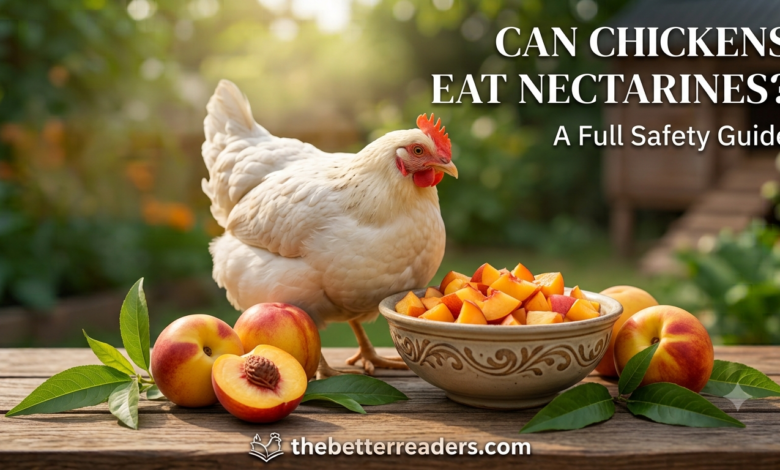
Nectarines show up everywhere during the warmer months, sitting in fruit bowls and farmers market stands with their smooth, glossy skin and juicy flesh. If you keep backyard chickens, it is only natural to wonder whether this sweet summer fruit is safe to share with your flock.
The short answer is yes, chickens can eat nectarines, and most flocks will eagerly devour them. But there is one important detail every keeper needs to understand before tossing a nectarine into the coop, and that is the pit.
This guide covers everything you need to know about feeding nectarines to chickens, including what parts are safe, what parts to avoid, nutritional benefits, portion sizes, preparation tips, and answers to the questions keepers ask most often when a nectarine tree starts producing more fruit than the household can eat on its own.
Can Chickens Eat Nectarines?foo
Yes, chickens can eat nectarines. The flesh and skin of the fruit are completely safe and chickens generally love the sweet, juicy taste of this popular summer fruit. Nectarines belong to the stone fruit family, closely related to peaches, plums, apricots, and cherries. This is an important context because it explains both why nectarines are a nutritious treat and why one specific part of the fruit needs to be kept away from your flock.
Why Is the Nectarine Pit Dangerous for Chickens?
The pit, sometimes called the stone or seed, is the one part of the nectarine that chickens should never eat. Nectarine pits contain a compound called amygdalin, which converts into hydrogen cyanide when digested. Cyanide is highly toxic and, in large enough amounts, can be fatal to chickens. The same is true across the entire Prunus genus, which includes peaches, apricots, cherries, and plums, so this is not something unique to nectarines alone.
In practice, the risk of a chicken actually eating a whole pit is fairly low. Nectarine pits are large, hard, and not particularly appealing compared to the soft flesh surrounding them, so most chickens will simply ignore the pit if it is left in the run. That said, the safest approach is to always remove the pit before offering nectarines to your flock, rather than relying on your chickens to avoid it on their own.
A few minutes spent slicing the fruit and discarding the stone is a small price to pay for complete peace of mind, especially in a mixed flock where curious younger birds may be more likely to peck at unfamiliar objects.
What About the Leaves, Bark, and Tree?
It is worth noting that the leaves, bark, and stems of the nectarine tree also contain trace amounts of the same toxic compound found in the pit. While chickens are unlikely to peck at tree bark or wander into an orchard eating leaves, keepers who grow their own nectarine trees should be aware of this and avoid deliberately offering trimmings or leaves as chicken forage.
What Nutrients Do Nectarines Give Chickens?
Nectarines are considered a nutritious treat rather than empty sugar, offering a solid mix of vitamins, minerals, and hydration. Here is a general breakdown of what a serving provides.
| Nutrient | Benefit for Chickens |
| Vitamin C | Supports immune function and stress resistance |
| Vitamin A (beta-carotene) | Supports vision, feather color, and skin health |
| Potassium | Supports nerve function and egg formation |
| Fiber | Aids digestion in moderate amounts |
| Water content | Helps keep chickens hydrated in hot weather |
Nectarines are roughly eighty eight percent water, which makes them a particularly refreshing treat during summer heat. The combination of hydration and antioxidants is one reason many keepers reach for nectarines specifically during hot weather months when flocks are more prone to heat stress.
Compared to dry treats like cracked corn or scratch grains, a juicy nectarine offers a very different kind of nutritional value, one built around moisture and micronutrients rather than pure calories.
Does Feeding Nectarines Improve Egg Quality or Feather Health?
The beta-carotene found in nectarines contributes to pigment production, which some keepers associate with brighter feather coloring over time. While nectarines are not a guaranteed way to boost egg production, the vitamin A and vitamin C content does support overall immune health, which indirectly supports consistent laying in a well cared for flock.
How Much Sugar Do Nectarines Contain?
A medium nectarine contains around eleven grams of natural sugar. While this sugar comes packaged with fiber and nutrients rather than being empty calories, it is still enough to cause problems if chickens eat too much too often.
Excess sugar intake in chickens can lead to digestive upset and, in more serious cases, contribute to hypoglycemia, a condition involving abnormally low blood sugar that can leave a chicken weak, disoriented, or in severe cases unconscious. This is why moderation matters even with a fruit as nutritious as the nectarine.
How Many Nectarines Can Chickens Eat?
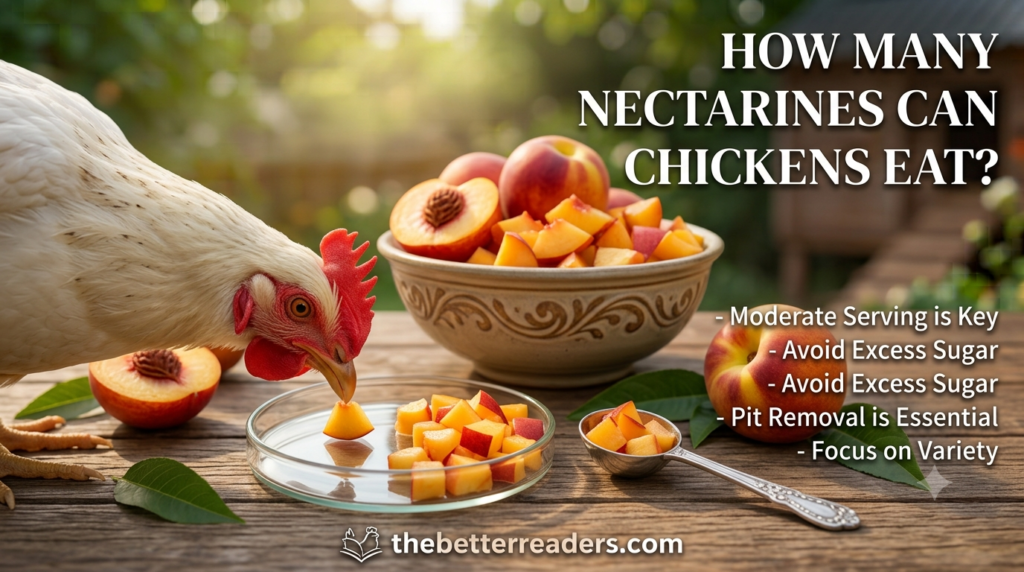
Most keepers recommend offering nectarines no more than one to three times per week, treating them as an occasional snack rather than a daily staple. A single nectarine, cut into small pieces, is generally enough to share among four or five chickens. Feeding larger amounts more frequently increases the risk of loose droppings and the sugar related issues mentioned earlier. As with any treat, nectarines should make up only a small fraction of a chicken’s total diet, with the majority still coming from a complete, balanced commercial feed.
Can Baby Chicks Eat Nectarines?
It is best to avoid feeding nectarines, or fruit treats in general, to very young chicks. Baby chicks have small bodies and are more sensitive to sugar spikes than adult birds, and their nutritional needs at this stage are best met through a properly formulated starter feed. Once chicks mature and transition toward grower feed, small diced pieces of nectarine can be introduced occasionally in very limited amounts.
How Should You Prepare Nectarines for Chickens?
Preparing nectarines for your flock is simple. Wash the fruit thoroughly to remove any pesticide residue or dirt, especially if it was not grown organically. Cut the nectarine in half and remove the pit completely before offering any pieces to your chickens. Dice the flesh into small, manageable chunks rather than leaving it whole, since this reduces the risk of one dominant bird claiming the entire treat and allows more of the flock to share.
Scattering diced nectarine across a wide area of the run also encourages natural foraging behavior and reduces squabbling among the flock, giving every bird, from the top of the pecking order to the bottom, a fair chance at the threat.
Can Chickens Eat Nectarine Skin?
Yes, chickens can safely eat nectarine skin along with the flesh. The skin itself does not contain the toxic compounds found in the pit, leaves, or bark, and it adds a bit of extra fiber to the treat. As always, washing the fruit before serving helps remove any surface residue.
Can Chickens Eat Dried or Canned Nectarines?
Fresh nectarines are the best option for chickens. Dried nectarines are far more concentrated in sugar per bite than fresh fruit, so they should only be offered sparingly, if at all. Canned nectarines are typically packed in sugary syrup and are best avoided entirely, since the added sugar offers no nutritional benefit and can worsen the very sugar related risks that moderation is meant to prevent.
What Other Fruits Pair Well With Nectarines?
Nectarines rotate well with other safe stone fruits and seasonal favorites such as peaches, watermelon, berries, and melons. Rotating between several fruits rather than repeating the same one every time helps keep a flock’s diet varied while spreading out both the flavor experience and the nutritional benefits across different fruits throughout the growing season.
Are Nectarines the Same as Peaches for Chickens?
Nectarines and peaches are actually the same species, with the main difference being that nectarines have smooth skin while peaches have a fuzzy exterior. Because of this close relationship, the safety guidelines for both fruits are essentially identical.
Both offer the flesh and skin as safe, nutritious treats, and both come with a hard pit that must be removed before feeding. If you already feed peaches to your flock, you can apply the exact same preparation routine to nectarines without any adjustments.
Why Do Chickens Enjoy Nectarines So Much?
Chickens are naturally drawn to bright colors and sweet flavors, and nectarines check both boxes with their vivid orange red skin and sugary juice. Many keepers report that nectarines disappear faster than almost any other fruit treat once scattered in the run,
with chickens often abandoning other activities to peck at the juicy pieces first. This strong appeal can actually work in a keeper’s favor, since mixing small amounts of diced nectarine with supplements like probiotics or electrolytes can encourage picky eaters to finish a treat they might otherwise ignore.
Signs Your Chickens Are Getting Too Much Fruit
Even a nutritious fruit like nectarine can cause issues if overfed. Watch for signs such as watery or unusually loose droppings, a drop in interest toward regular feed, or noticeable lethargy after a large fruit feeding. If any of these signs appear,
scale back the frequency and portion size of nectarine treats and make sure the bulk of your flock’s diet continues to come from a complete, balanced commercial feed formulated for their age and purpose. A flock that snacks occasionally on fruit while eating mostly balanced feed will almost always stay healthier than one where treats make up a large share of daily intake.
Nectarines During Hot Weather
Because nectarines are roughly eighty eight percent water, they make an especially useful treat during periods of high heat when chickens are at greater risk of dehydration and heat stress. Offering chilled, diced nectarine on a hot afternoon can help encourage extra fluid intake in birds that may otherwise be reluctant to drink enough water.
Pairing nectarine with other water rich treats such as watermelon or cucumber during the hottest months of the year is a simple way to support your flock’s hydration alongside their regular water supply. Also read this our food section.
FAQs
Are nectarines poisonous to chickens?
No, the flesh and skin of nectarines are safe. Only the pit, along with the leaves and bark of the tree, contain the toxic compound that converts to cyanide.
Do I need to peel nectarines before giving them to chickens?
No, peeling is not necessary. Nectarine skin is safe for chickens to eat as long as the fruit has been washed first.
Can chickens eat the whole nectarine pit by accident?
It is unlikely since the pit is large, hard, and unappealing compared to the flesh, but it should always be removed as a precaution rather than left to chance.
How often can chickens have nectarines as a treat?
One to three times per week in small portions is a commonly recommended guideline, keeping total treats a small share of their overall diet.
Can nectarines cause health problems in chickens?
Overfeeding nectarines can lead to loose droppings or, in more serious cases, hypoglycemia due to excess sugar, which is why moderation matters more than the fruit itself being unsafe.
Final Thoughts
Nectarines are a safe, refreshing, and nutrient rich treat for backyard chickens as long as the pit is removed and portions stay moderate. From vitamin C and beta-carotene to a high water content that helps flocks stay cool in summer, this stone fruit offers real benefits when fed the right way.
Keep the preparation simple, watch your portions, and your chickens will enjoy one of the season’s sweetest treats without any unnecessary risk.
Whether your nectarines come from a backyard tree or an overflowing basket from the farmers market, sharing a few diced pieces with your flock is an easy way to add variety, hydration, and a bit of extra nutrition to their weekly routine.