
The Ultimate Calorie Calculator: Track & Reach Goals
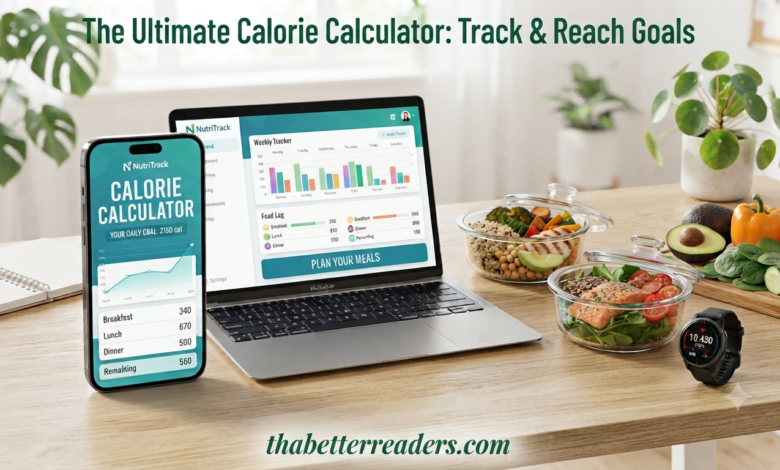
The Ultimate Calorie Calculator: 5 Ways to Track & Reach Your Fitness Goals
Understanding how your body processes energy is the foundational step toward transforming your health, physique, and overall wellness. Whether your personal objective is shedding stubborn body fat, building lean muscle mass, or maintaining your current physique, everything begins with energy balance. At the heart of this physiological equation lies a reliable calorie calculator, a tool designed to cut through the noise of modern dieting trends and provide you with concrete, personalized mathematical metrics.
In today’s digital landscape, people are constantly bombarded with conflicting advice regarding nutrition, miracle supplements, and extreme caloric restrictions. However, human biology remains anchored in science—specifically, the law of thermodynamics. By accurately determining your Total Daily Energy Expenditure (TDEE) and Basal Metabolic Rate (BMR), you strip away the guesswork. This comprehensive guide will explore the mechanics of energy balance, break down how equations like Mifflin-St Jeor operate, examine macronutrient distribution, and teach you how to implement sustainable dietary habits for life.
1. The Fundamental Science of Energy Balance
Energy balance is the relationship between the energy you put into your body through food and beverages (calories consumed) and the energy your body expends through basic biological functions, daily movement, and structured exercise (calories burned). This delicate system dictates whether your body mass fluctuates, stabilizes, or increases over time.
When you consume more energy than you burn, the body stores the surplus primarily as adipose tissue, leading to weight gain. Conversely, consuming fewer calories than your body requires forces it to tap into stored energy reserves for fuel, resulting in weight loss. To understand the broader medical and clinical frameworks governing human nutrition and metabolic health, authoritative health guidelines provided by the Centers for Disease Control and Prevention offer invaluable scientific data. Utilizing a proper calorie calculator bridges the gap between scientific theory and practical everyday execution.
2. Deconstructing Basal Metabolic Rate (BMR) and TDEE
To master your daily nutrition, you must first comprehend the two core components calculated by any professional-grade calorie calculator: BMR and TDEE.
2.1 Basal Metabolic Rate: Keeping the Engine Running
Your BMR accounts for roughly 60% to 75% of the total calories you burn on a daily basis. It represents the absolute minimum amount of energy your body requires to sustain vital physiological operations while at complete rest—such as pumping blood through the cardiovascular system, regulating body temperature, filtering toxins via the kidneys, and maintaining brain function. Even if you spent an entire day lying motionless in bed, your body would burn this precise amount of energy.
2.2 Total Daily Energy Expenditure and Activity Multipliers
While BMR is your baseline, TDEE accounts for every movement you make throughout the day. This includes Non-Exercise Activity Thermogenesis (NEAT)—such as walking, standing, fidgeting, and cleaning—as well as structured physical exercise and the Thermic Effect of Food (TEF), which is the energy required to digest, absorb, and process the nutrients you eat. Advanced dietary standards and research publications maintained by agencies like the National Institutes of Health highlight how individual lifestyle variations drastically alter these multipliers.
3. Mathematical Formulas Behind the Calculator
Over the decades, exercise scientists and medical researchers have formulated several mathematical models to estimate human energy expenditure. Among these, the Mifflin-St Jeor equation is widely recognized by clinical dietitians and fitness experts as the gold standard for accuracy.
The formula evaluates your biological sex, age in years, current weight in kilograms, and height in centimeters. By processing these variables, the calorie calculator determines your precise baseline before applying an activity multiplier ranging from sedentary (little to no exercise) to extra active (hard daily training and physical labor). For those interested in broader health metrics and body composition standards, exploring resources on our fitness and health guidelines page can provide deeper context.
“Consistency trumps perfection. A calorie calculator gives you the map, but your daily adherence and lifestyle choices dictate whether you successfully reach your destination.”
4. Tailoring Your Numbers for Specific Fitness Goals
Once your calculator output reveals your maintenance calories—the exact point where weight remains stable—you can adjust your intake based on your personal aspirations.
Strategic Deficits and Surpluses
To lose fat sustainably, create a moderate deficit of 300 to 500 calories below your TDEE, ensuring steady fat loss without crashing your metabolism. Conversely, for muscle hypertrophy, introduce a controlled surplus of 250 to 400 calories combined with progressive resistance training.
5. Frequently Asked Questions
Q: How accurate is a standard calorie calculator?
A: Mathematical formulas provide an exceptionally close estimate, usually within 10% of your true metabolic rate. However, individual metabolic variations mean you should monitor your weight over two weeks and adjust your intake accordingly.
Q: Should I eat back the calories I burn during exercise?
A: If you selected your precise activity level when filling out the calculator, your exercise is already factored into your daily TDEE. Eating them back entirely often leads to overconsumption due to fitness tracker inaccuracies.
Q: Why am I not losing weight despite being in a caloric deficit?
A: The most common culprit is inaccurate food tracking, such as underestimating portion sizes, forgetting liquid calories, or ignoring cooking oils. Water retention and hormonal shifts can also mask fat loss temporarily.
Q: Does macronutrient composition matter as much as total calories?
A: While total calories dictate weight movement, macronutrients (proteins, fats, and carbohydrates) dictate body composition, muscle retention, satiety, and hormonal health.