Can Goats Eat Lettuce? Safe Feeding Guide

Goats are famous for being curious eaters, nibbling at almost anything within reach of their pen. If you grow lettuce in a home garden or simply have extra heads sitting in the fridge, it makes sense to wonder whether you can share it with your herd.
The short answer is yes, goats can eat lettuce, and most goats genuinely enjoy it as a crunchy, refreshing snack. But lettuce is not a nutritional powerhouse, and there are a few details worth understanding before making it a regular treat.
This guide walks through everything a goat owner needs to know about feeding lettuce, from the different varieties and their nutritional differences to proper portions and preparation.
Can Goats Eat Lettuce?
Yes, goats can eat lettuce safely and happily. Nearly every common variety, including iceberg, romaine, butter, bibb, and leaf lettuce, is non toxic and perfectly fine for goats to nibble on.
Lettuce is a favorite among many backyard herds thanks to its crisp texture and mild taste, and it is a common enough garden crop that most goat owners eventually end up with extra heads or trimmings to share.
That said, lettuce should always be treated as a treat rather than a dietary staple. Goats are ruminants with digestive systems built around fibrous forage like hay and pasture, and lettuce simply does not offer the same nutritional density needed to keep a herd healthy and productive over the long term.
Why Is Lettuce Considered Safe for Goats?
Lettuce contains no toxins that pose a danger to goats, which is why it lands firmly on the safe treat list rather than the caution list. Unlike nightshade vegetables such as green tomatoes or potato plants, which can cause real harm, lettuce is simply a low risk, water rich leafy vegetable that most goats can enjoy without any special precautions.
The main concern with lettuce is not toxicity but rather how much of it a goat eats and how it fits into the rest of their overall diet.
What Types of Lettuce Can Goats Eat?
Goats can eat essentially any variety of true lettuce, though the nutritional value varies noticeably between types.
| Lettuce Type | Nutritional Value | Notes for Goats |
| Romaine | Highest of common types | Good source of vitamins A, C, and K |
| Green or Red Leaf | Moderate | Balanced choice between iceberg and romaine |
| Butterhead or Bibb | Moderate | Soft texture, slightly sweeter taste |
| Iceberg | Lowest | Mostly water, minimal fiber or nutrients |
Romaine lettuce is generally considered the best choice if you want to offer something with real nutritional value, since it carries more vitamins and minerals than the other common types. Iceberg lettuce, while completely safe, is close to ninety five percent water and offers very little in terms of protein, fiber, or vitamins, which means a goat could eat a large amount and still gain almost nothing nutritionally from it.
Does Lettuce Offer Any Real Nutritional Value?
Lettuce does provide some vitamins and minerals, including vitamin A, vitamin C, vitamin K, folate, calcium, and potassium, particularly in the darker leaf varieties like romaine and leaf lettuce. However, because lettuce is so high in water content, these nutrients exist in fairly small concentrations per serving compared to denser forage crops.
Goats should not rely on lettuce for meaningful nutrition and should continue getting the bulk of their vitamins and minerals from a proper diet of hay, pasture, and formulated feed.
Can Baby Goats Eat Lettuce?
Baby goats, often called kids, should not be given lettuce or any other treats until they are fully weaned and eating the same forage as the adult herd. For roughly the first several weeks of life, a kid’s digestive system is designed to process milk, not solid treats, and introducing lettuce too early can cause digestive upset.
Once kids are weaned and eating hay and grain like the rest of the herd, small amounts of lettuce can be introduced gradually while watching for any signs of an upset stomach.
How Much Lettuce Can Goats Eat?
A commonly cited guideline is that lettuce, like most leafy treats, should make up no more than about twenty percent of a goat’s total diet at most, and realistically far less on a daily basis. Lettuce should never replace the hay, pasture, or formulated feed that makes up the core of a goat’s nutrition.
Offering a few leaves as an occasional treat, rather than large quantities on a regular basis, is the safest approach for keeping a herd’s digestion balanced.
Does Lettuce Cause Bloating in Goats?
Feeding too much lettuce, or too much of any leafy green, can occasionally lead to digestive issues in goats such as bloating, gas, or diarrhea. This is more likely to happen when a large quantity is introduced suddenly rather than gradually.
Because lettuce is mostly water, it can also fill a goat’s stomach without providing the fiber needed to keep the rumen functioning normally, which is part of why moderation matters even though the vegetable itself is not toxic.
How Should You Prepare Lettuce for Goats?
Preparing lettuce for your herd is simple. Wash the lettuce thoroughly to remove dirt, pesticide residue, or any contaminants that may be present, especially if it came from a grocery store rather than your own garden. Check the leaves for signs of rotting, sliminess, or mold, since spoiled lettuce can make goats sick even though fresh lettuce is safe.
Tear or cut the leaves into smaller, manageable pieces rather than offering an entire head at once, both to prevent choking and to make it easier to portion appropriately across the herd. Always serve lettuce fresh and raw, since cooking it drains much of the water and nutrients, leaving behind an even less useful treat than it already was.
How Does Lettuce Compare to Other Leafy Greens?
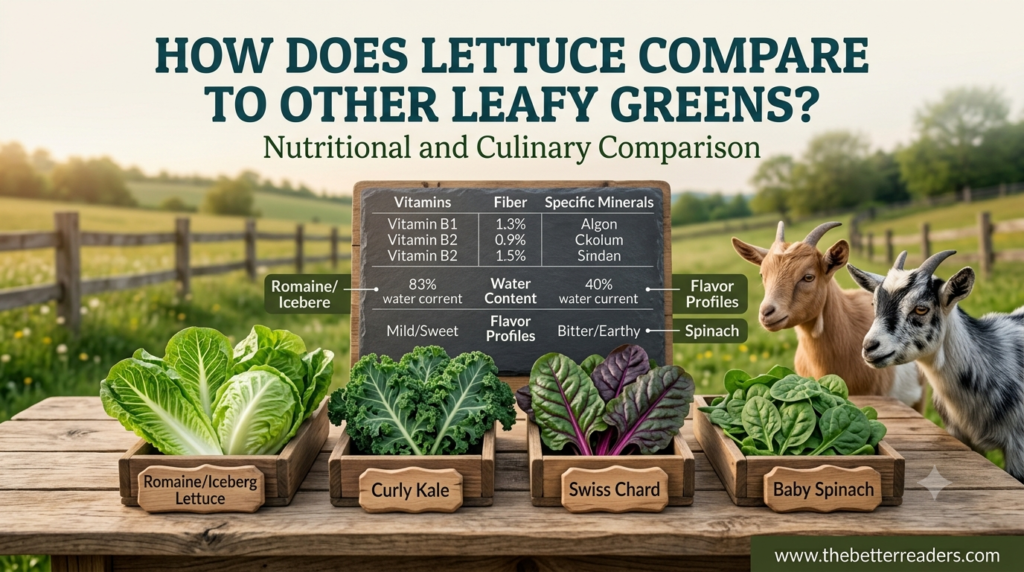
Compared to other leafy greens commonly fed to goats, lettuce actually ranks fairly low on the nutritional scale. Kale, spinach, and Swiss chard all provide considerably more vitamins, minerals, and fiber per serving than lettuce does, even the more nutritious romaine variety.
This does not mean lettuce is a poor choice, but goat owners looking to maximize the nutritional benefit of a leafy treat may want to rotate in kale or chard alongside lettuce rather than relying on lettuce alone.
Cabbage is another common comparison point, and while it offers more nutrients than lettuce, it also carries a higher risk of causing gas and bloating if overfed, so lettuce actually has an advantage in terms of digestive gentleness.
Do Goats Actually Like Lettuce?
Most goats take to lettuce quickly, drawn in by its crisp texture and mild, slightly sweet flavor. Because goats are natural browsers rather than grazers, they tend to enjoy the variety that lettuce and other garden vegetables add to a diet that otherwise consists mainly of hay and pasture.
Many owners find that fresh greens like lettuce are a useful way to encourage a goat to eat something else alongside it, such as mixing torn lettuce leaves in with grain or medication to make a less appealing food more enticing.
Signs You May Be Overfeeding Lettuce
Even though lettuce is a safe treat, feeding too much of it too often can lead to noticeable problems. Watch for soft or watery droppings, a bloated or swollen appearance in the abdomen, reduced interest in hay, or general lethargy after a large lettuce feeding.
If any of these signs appear, cut back on the amount and frequency of lettuce being offered and make sure your goat’s regular hay and feed intake has not dropped as a result of filling up on treats. In more serious cases involving visible bloating, drooling, or an inability to stand normally, contacting a veterinarian promptly is the safest course of action.
Is Lettuce a Good Source of Hydration for Goats?
Because most lettuce varieties are around ninety five percent water, offering lettuce can provide a small hydration boost, particularly during hot summer months when goats are more prone to heat stress.
This is one of the more practical benefits of lettuce, even for the less nutritious iceberg variety, since the high water content can encourage a goat to take in extra fluids in a form that feels like a treat rather than a chore.
That said, lettuce should never be considered a substitute for a constant supply of clean drinking water, which remains essential for a goat’s health regardless of what treats are offered.
Can Goats Eat Lettuce Every Day?
While lettuce is not dangerous in small amounts, offering it every single day is unnecessary and not particularly beneficial given how little nutrition it provides. Most goat owners find that offering lettuce a few times a week, mixed in with other safe vegetables and fruits, works better than making it a daily habit.
Rotating treats also helps prevent a herd from filling up on low nutrition snacks instead of eating the hay and feed that actually sustains them.
Can Goats Eat Lettuce From a Bagged Salad Mix?
Plain bagged lettuce or salad greens without any added ingredients are generally fine, but pre-made salad kits often include dressing, croutons, cheese, or other add-ins that are not appropriate for goats. Onions and garlic, which sometimes appear in salad mixes or dressings,
should always be avoided when feeding goats, along with any salt heavy or sugary toppings. If you want to share a salad mix with your goats, it is safest to pick out just the lettuce and other safe vegetables rather than offering the entire prepared dish.
What Other Vegetables Pair Well With Lettuce?
Lettuce pairs naturally with other goat safe vegetables like carrots, bell peppers, cucumbers, squash, and pumpkin. Rotating between a variety of vegetables rather than relying only on lettuce helps ensure a broader mix of nutrients while keeping treat time interesting for the herd.
Many owners like to scatter or hide pieces of lettuce and other vegetables around the pen, which encourages the natural foraging instinct goats have and gives them some mental stimulation along with the snack.Read this blog Can Goats Eat Blueberries?
.
FAQs
Is iceberg lettuce bad for goats?
Iceberg lettuce is not toxic or harmful, but it is mostly water and provides very little nutritional value compared to other lettuce types like romaine.
Can goats eat lettuce stems and cores?
Yes, the stems and core of a lettuce head are safe for goats, though they are tougher and less appealing than the leafy portions.
Will lettuce make my goat sick?
Fresh, plain lettuce fed in moderate amounts is unlikely to cause illness, though overfeeding any leafy green can occasionally lead to bloating or loose stools.
Can pregnant goats eat lettuce?
Yes, pregnant women can safely eat lettuce as an occasional treat, though it will not provide the extra calories and nutrients needed during pregnancy.
What is the best type of lettuce to feed goats?
Romaine lettuce is generally considered the best option due to its higher vitamin and mineral content compared to iceberg or other lower nutrient varieties.
Final Thoughts
Lettuce is a safe, low risk treat that most goats genuinely enjoy, whether it comes from a home garden or a grocery store bag. While it should never replace hay, pasture, or a properly balanced feed, offering a few leaves now and then adds variety, hydration, and a bit of extra vitamin content to a goat’s diet.
Choose romaine or leaf lettuce when possible for the most nutritional value, keep portions moderate, and your herd will have a treat they look forward to without any unnecessary risk.
Whether you are clearing out extra garden produce or simply have leftover salad greens from the kitchen, sharing lettuce with your goats is an easy, low cost way to add a bit of variety and enrichment to their day.