
How to Organize Your Company Secretarial File
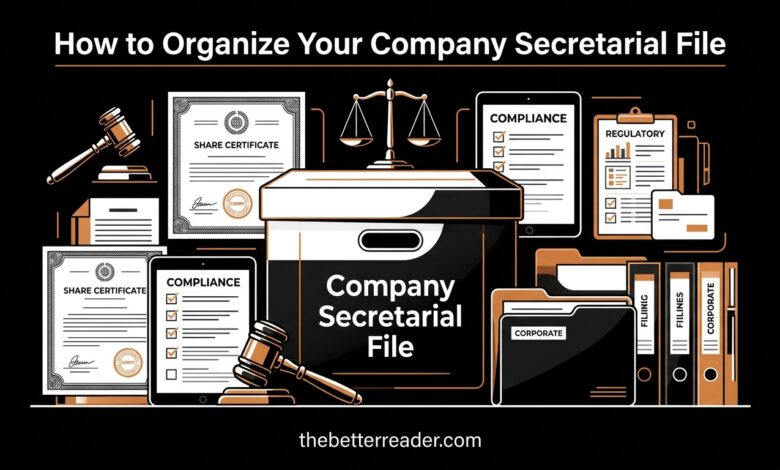
Maintaining clear corporate governance begins with effective administrative organization. For business owners, corporate officers, and compliance leads, establishing a structured company secretarial file is essential to safeguarding legal standing and meeting regulatory requirements. From statutory registers to official meeting minutes, managing these vital business records requires systematic attention to detail.
Every commercial entity must maintain accurate records detailing ownership, managerial authority, and statutory changes. Utilizing standard compliance guidelines established by regulatory bodies like Wikipedia Corporate Governance Guidelines ensures that your company remains fully compliant. You can also explore expert educational resources on The Better Readers to stay informed on professional management techniques and administrative best practices.
“An unorganized company secretarial file is a hidden risk in business operations. Systematic record-keeping transforms administrative compliance into a strategic asset.”
Understanding the Role of a Company Secretarial File
A company secretarial file is the primary repository containing all legal, structural, and regulatory documents associated with a registered entity. It documents the life cycle of a corporatio from initial registration and director appointments to capital changes and statutory filings.
- Ownership Verification: Provides concrete legal proof of equity ownership through maintained share registers.
- Regulatory Accountability: Ensures all statutory returns and official filings are documented for historical verification.
- Seamless Audits: Simplifies investor reviews, bank compliance checks, and legal due diligence during transactions.
Whether stored physically at a registered office address or maintained within encrypted secretarial management software, this folder must remain accurate and accessible for inspection by authorized stakeholders.
Essential Documents in Your Company Secretarial File
To establish a fully compliant company secretarial file, corporate secretaries must organize documentation into clear, structured categories:
1. Incorporation and Governance Records
The core structural framework of the business relies on foundational charter documents:
- Certificate of Incorporation: The legal charter establishing entity creation.
- Articles & Memorandum of Association: Internal regulations defining operational rules, director duties, and shareholder rights.
- Certificates of Name Change: Any historical legal documentation modifying company trade names.
2. Mandatory Statutory Books
Corporate statutes mandate that businesses continuously update specific registers within their company secretarial file:
| Statutory Book | Primary Information Recorded |
|---|---|
| Register of Directors | Full legal names, residential/service addresses, nationality, dates of appointment and resignation. |
| Register of Members | Complete list of shareholders, number and class of shares held, acquisition dates, and transfer logs. |
| Register of PSCs | Identification of Persons with Significant Control holding over 25% voting rights or share equity. |
| Register of Charges | Documentation of secured loans, mortgages, debentures, and financial encumbrances against assets. |
3. Financial and Filing Receipts
Complementing corporate registers, the secretarial binder must retain copies of annual financial statements, tax clearance filings, and annual confirmation filings submitted to official business registries.
Step-by-Step Guide to Organizing Your Secretarial Documents
Establishing an efficient workflow simplifies the upkeep of your company secretarial file. Follow these actionable steps:
- Chronological Arrangement: Sort meeting minutes, director resolutions, and annual filings by date for rapid reference.
- Implement Dual Archiving: Pair physical binders with digital PDF archives stored on secure, encrypted cloud servers.
- Reconcile Annually: Cross-check internal registers against public registry filings prior to submitting annual returns.
When changes occur—such as issuing new share classes or appointing a new director—internal files should be updated immediately alongside statutory registry submissions.
Digitalization Trends in Corporate Secretarial Management
Modern legal technology has revolutionized how companies store secretarial paperwork. Transitioning from paper binders to digital secretarial platforms delivers substantial operational advantages:
- Automated E-Filing: Seamlessly submit statutory notices and confirmation statements to government portals.
- Enhanced Security: Encrypted data storage safeguards sensitive personal director information from physical loss or theft.
- Instant Due Diligence: Grant auditors or prospective investors instant, permission-based access to corporate records.
Common Compliance Mistakes to Avoid
Neglecting corporate administrative duties can lead to costly consequences. Avoid these frequent management errors:
- Failing to Record Share Transfers: Share issuance is not legally complete until entered into the official Register of Members inside the secretarial file.
- Delayed Filing of Changes: Reporting director appointments or registered office moves after official statutory deadlines incurs administrative penalties.
- Incomplete Meeting Records: Omitting signed board resolutions weakens legal defense during corporate disputes.
Frequently Asked Questions (FAQs)
What is the main purpose of a company secretarial file?
The primary purpose is to maintain an accurate legal record of a company’s structure, governance, ownership, and regulatory filings to ensure full compliance with corporate laws.
Can a secretarial file be stored entirely in digital format?
Yes, most modern corporate jurisdictions permit digital statutory registers, provided the software maintains secure access controls, tamper-evident logs, and readable formatting.
Who is legally responsible for maintaining secretarial records?
The ultimate legal responsibility rests with the company directors, regardless of whether they employ an internal company secretary or outsource the task to an external professional service provider.
How quickly must changes in directors or address be updated in the file?
Internal statutory registers should be updated immediately, and official notification forms must typically be filed with the corporate registrar within 14 days of the event.
Final Summary on Corporate File Management
Establishing a comprehensive company secretarial file ensures long-term corporate security, seamless compliance, and total operational transparency. By structuring foundational documents, maintaining mandatory statutory registers, and embracing modern electronic filing tools, enterprise leaders can effectively protect their commercial assets while meeting regulatory standards.
About the Author
Syeda is a Global Link Building Specialist and Senior Content Editor. She specializes in off-page Search Engine Optimization, digital brand authority, and conducting comprehensive web domain audits to execute data-backed corporate content strategies.